-
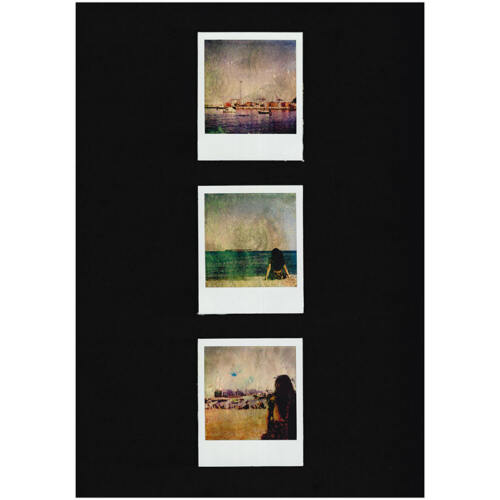 Fabio Mancari Tecnica: Polaroid Bleaching Anno: 2024 Dimensioni: 42cm x 29,7cm Descrizione: Vado Bleach//001 e Vado Bleach//002 sono due parti di un progetto più ampio che rappresentano un lembo di spiaggia con molo semi-abbandonato all'interno del porto di Vado Ligure. La spiaggia si anima solo nei week end con le persone che si fanno spazio tra barche abbandonate e moli di attracco inutilizzati. La presenza della ragazza volutamente in posa vuole amplificare questo contrasto in un luogo che in parte è lasciato a se stesso ma che sporadicamente rinasce dal suo stesso abbandono.
 -
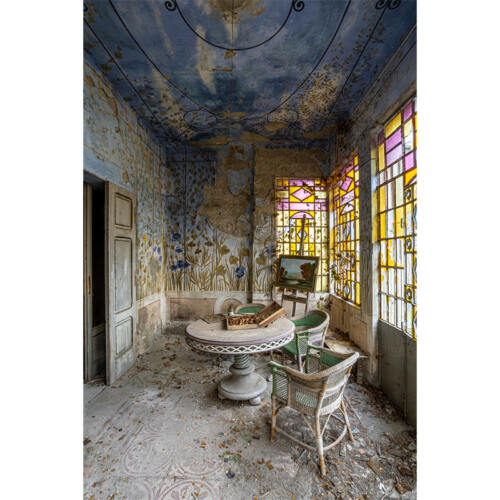 Rocco Tecnica: olio su tela Anno: 2024 Dimensioni: 40 x 60 cm Descrizione: Una sala relax abbandonata, con affreschi floreali deteriorati, vetrate colorate e mobili d'epoca lasciati al degrado del tempo. La luce filtrata dalle finestre illumina poeticamente questo ambiente sospeso tra passato e presente.
 -
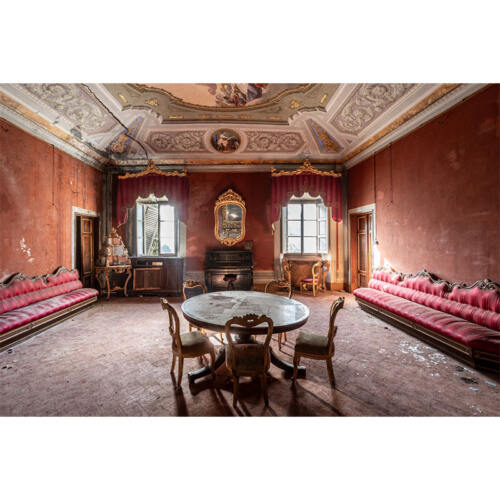 Rocco Tecnica: olio su tela Anno: 2024 Dimensioni: 60 x 40 cm Descrizione: Stanza abbandonata di un palazzo nobiliare, dove il tempo sembra essersi fermato. I colori caldi e i dettagli sontuosi evocano l’eco di un’eleganza perduta, tra decadenza e memoria.
 -
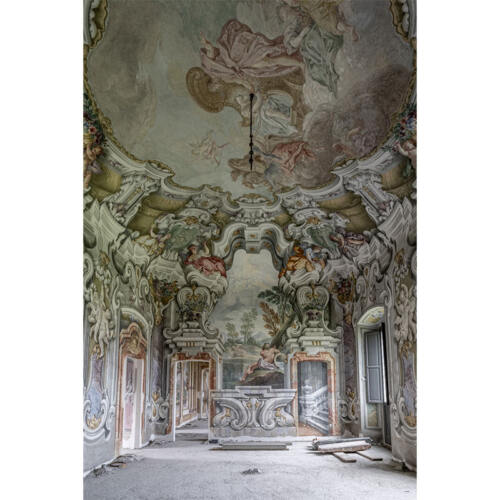 Rocco Tecnica: olio su tela Anno: 2024 Dimensioni: 40 x 60 cm Descrizione: Stanza affrescata di un palazzo in stato di abbandono. L'eleganza sopravvive nel silenzio del tempo.
 -
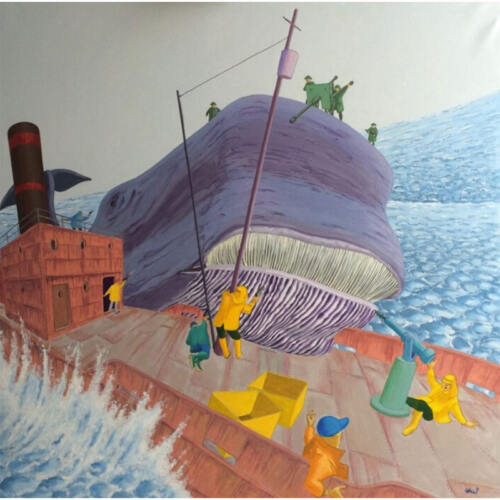 Stefano Galli Tecnica: Acrilico Dimensione: 80cmx80cm Anno: 2016 Descrizione: Come guardando con nostalgia una fotografia in bianco e nero, anche nei quadri dell'artista l'osservatore è libero di studiare e interpretare l'immagine davanti a sé, creando storie uniche e proprie.
 -
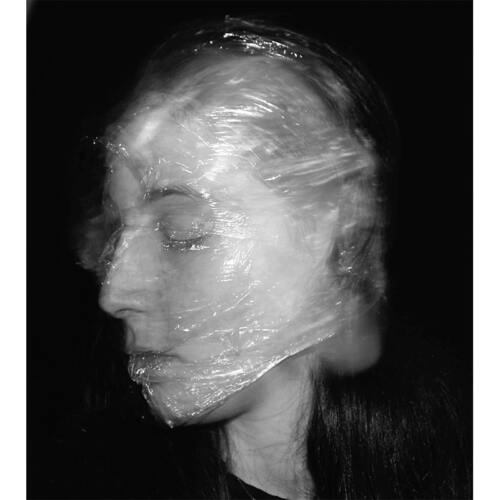 Arianna Delfino Tecnica: Fotografia digitale Anno: 2022 Dimensione: 50 cm x 30 cm Descrizione: L’opera fotografica digitale in movimento— che mostra il volto dell’artista intrappolato in una pellicola trasparente — è una riflessione visiva sull’identità compressa, sul corpo contenuto e sulla condizione psicologica vissuta durante la pandemia. Realizzata in quel periodo di isolamento collettivo, ma comunque ancora attuale, la fotografia si carica di significati profondi e universali, trasformando l’autoritratto in un atto politico ed esistenziale. Il volto non è qui un semplice elemento riconoscibile: è distorto, soffocato, vulnerabile, e proprio per questo intensamente umano. La pellicola trasparente agisce come metafora visiva di un limite imposto, una barriera sottile ma opprimente, tra l’interno e l’esterno, tra il respiro e il silenzio, tra l’io e il mondo. Rendere visibile l’invisibile, in questo caso l’angoscia, il senso di prigionia, ma anche il desiderio di liberazione. La fotografia, in movimento è un processo, un tentativo di uscita, un corpo che cerca spazio, che lotta per riemergere. In questo, l’opera esprime una narrazione forte, intima ma collettiva, personale ma universale. La pellicola trasparente, apparentemente neutra, diventa un simbolo pesante e concreto, capace di trasformare l’autoritratto in un’azione. È un ritratto vulnerabile e potente, che affronta il tema dell’identità in un momento di crisi globale. È il volto dell’essere umano che resiste, anche quando non può respirare liberamente.
 -
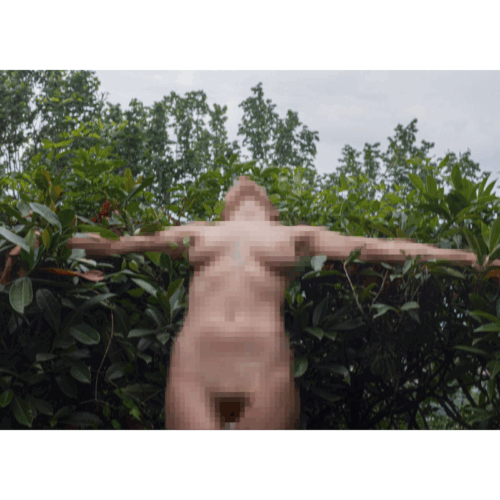 Tecnica: Fotografia digitale Anno: 2025 Dimensione : 36 x 50 cm Descrizione: L'opera vuole proporsi come un manifesto contro la censura imperante in certi luoghi (digitali) dell'arte; se l'arte è valida in ogni sua forma, deve essere valida ovunque, soprattutto in quelle che si sono dimostrate essere le vetrine più efficaci. I corpi sono arte, i corpi raccontano, i corpi devono essere liberi.
 -
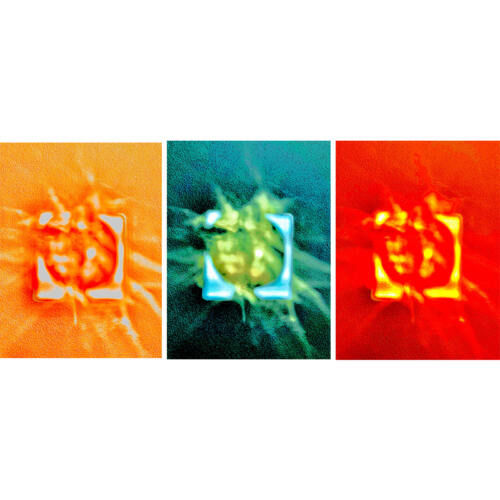 Silvia Corti Tecnica: Fotografia, Trittico che riporta sul retro dell’opera la scritta: “Sussurro alla tua pelle con la vibrazione delle mie emozioni.” Anno: 2025 Dimensioni: 50 X 70 cm Descrizione: Questo trittico è una deflagrazione sensuale di luce, corpo e memoria. È un linguaggio che non si pronuncia, ma si manifesta: un’emanazione silenziosa, un sussurro visivo che vibra nello spazio tra un’emozione e l’altra. La parola, qui, si fa carne pulsante, colore liquido, riflesso che pulsa sotto la pelle. È l’istante prima del linguaggio, quello in cui si sente tutto, ma non si può ancora dire nulla. Ogni immagine è un respiro trattenuto, una soglia in cui il corpo incontra la parola nel suo stato più primitivo: quello della vibrazione. L’opera nasce da un ascolto profondo della materia – luce, metallo, superficie – che diventa veicolo di un contatto più sottile. È una poesia muta che si insinua nei sensi, innescando un cortocircuito tra la vista e il sentire. Completa il trittico una frase, sospesa tra il desiderio e l’intimità: “Sussurro alla tua pelle con la vibrazione delle mie emozioni.” Questa dichiarazione non è soltanto testo: è il cuore segreto dell’opera, il suo battito sommerso. È la prova che l’arte, come la parola, può accadere senza essere detta, trasformandosi in atto sensibile, in tocco, in verità incarnata. Come scriveva Lalla Romano, “le parole sono segni, e si può anche scrivere con la pelle”; e in fondo, è proprio ciò che accade qui. Le immagini si fanno corpo, e nel loro silenzio visivo echeggia quella “voce che non è voce” evocata da Eugenio Montale – la stessa che ci attraversa quando il linguaggio cede il passo all’essenza. È lì che si crea lo spazio per un legame: tra noi, leggere.
 -
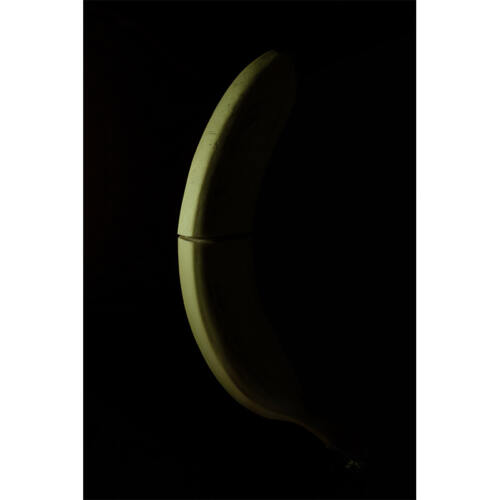 Silvia Castellaro Tecnica : Fotografia Dimensione: 25 x38 cm Anno: 2021Descrizione: foto Fine Art digitale – il soggetto è una banana che esce dal buio tagliata a metà – suggestione di un icona –
 -
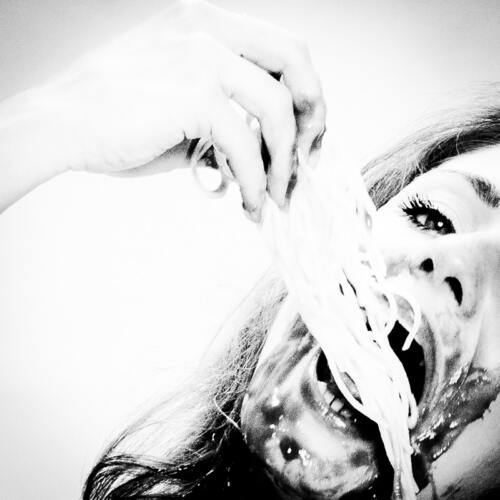 Andreas Trnka Tecnica : Photography Dimensione: 50×50 cm Anno: 2021Descrizione: This photograph explores the tension between realism and absurdity through a deliberately exaggerated moment. Though the subject and elements—hair, skin, spaghetti—are entirely real and recognizable, the composition pushes the boundaries of realism into the surreal. Shot in stark black and white with high contrast, the image captures a spontaneous gesture that feels both performative and unsettling. It remains grounded in photographic realism while inviting viewers to question context, consumption, and expression
 -
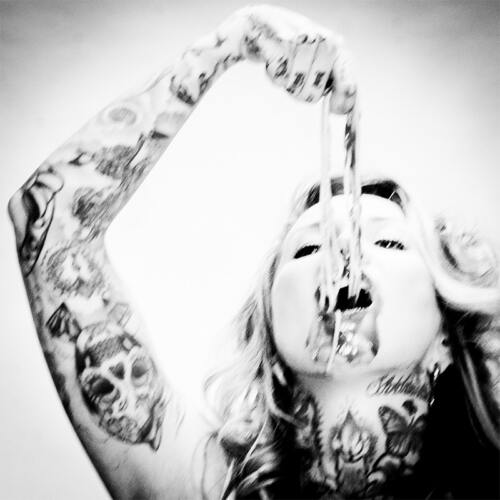 Andreas Trnka Tecnica : Photography Dimensione: 50×50 cm Anno: 2021Descrizione: This photograph explores the tension between realism and absurdity through a deliberately exaggerated moment. Though the subject and elements—hair, skin, spaghetti—are entirely real and recognizable, the composition pushes the boundaries of realism into the surreal. Shot in stark black and white with high contrast, the image captures a spontaneous gesture that feels both performative and unsettling. It remains grounded in photographic realism while inviting viewers to question context, consumption, and expression
 -
 Andreas Trnka Tecnica : Photography Dimensione: 50×50 cm Anno: 2021Descrizione: This photograph explores the tension between realism and absurdity through a deliberately exaggerated moment. Though the subject and elements—hair, skin, spaghetti—are entirely real and recognizable, the composition pushes the boundaries of realism into the surreal. Shot in stark black and white with high contrast, the image captures a spontaneous gesture that feels both performative and unsettling. It remains grounded in photographic realism while inviting viewers to question context, consumption, and expression
 -
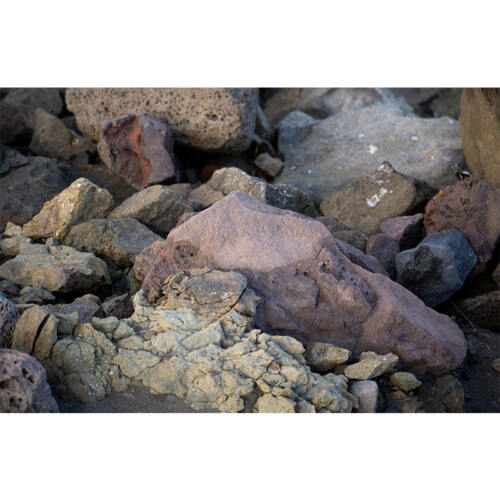 Laura Skehan Tecnica: Photo Anno: 2021 Dimensione: 75cm x 50cm Descrizione: is a photograph I took while reflecting on the geological relationship between Iceland and the Moon. I was particularly drawn to identifying rocks such as basalt and breccia—materials that are present on both bodies. Iceland, with its sparse and silent terrain, feels otherworldly. It’s no coincidence that its landscape was used to train Apollo astronauts, offering a striking analogue for the lunar surface. The title, Plus lourd que l’air (“heavier than air”), is inspired by 19th-century French photographer Félix Nadar, who took the first aerial photograph. Fascinated by air travel, Nadar commissioned Le Géant, a giant hot air balloon that influenced Jules Verne’s novels Five Weeks in a Balloon and From the Earth to the Moon. Together, Nadar and Verne founded La Société d’encouragement de la locomotion aérienne au moyen du plus lourd que l’air—The Society for the Encouragement of Air Travel by Means of Machines Heavier than Air. In thinking about Iceland’s fiery origins and its geological connection to the Moon, I’m drawn to this uncanny material bond: the Moon, a ‘floating’ rock tethered to Earth by gravity, shaping our tides and, in turn, the formation of basalt. This work explores a mysterious, unknowable relationship—one we can never fully grasp through observation alone. There’s something profound in that not-knowing, in the vast timeline of geological and hydrological forces that shape both worlds beyond our experience.
 -
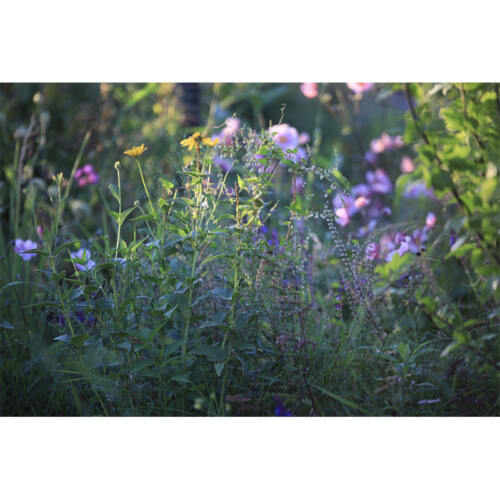 Laura Skehan Tecnica: Photo Anno: 2024 Dimensione: 60 x 90cm Descrizione: During my residency at ZK/U, Centre for Art and Urbanistics in Berlin, I spent time working in the community garden at Moabit Stadtgarten. As I observed the changing light, the plants as they bloomed and bore fruit, and the insects and creatures that wandered through this urban meadow, I was reminded of nature’s unhurried cycles. The wanted plants and the weeds—both would eventually wither when winter arrived. This ongoing transformation became symbolic, a chance for introspection. The garden, asking nothing of me except to witness, allowed me to lose myself in thought, to remember. That summer, I wrote incessantly. My scribbled notes revealed reflections on missed opportunities, forgotten dreams, first kisses, a yearning for something undefined, a fear of embracing myself, and the resistance I found in moments of joy and sharing. I noted the passing of time, the shifting mix of boredom and bliss. I felt the pull of spring’s hope, the fullness of summer, the harvest’s abundance, and the need for autumn's reflection before hibernating through winter’s long nights—only to begin again
 -
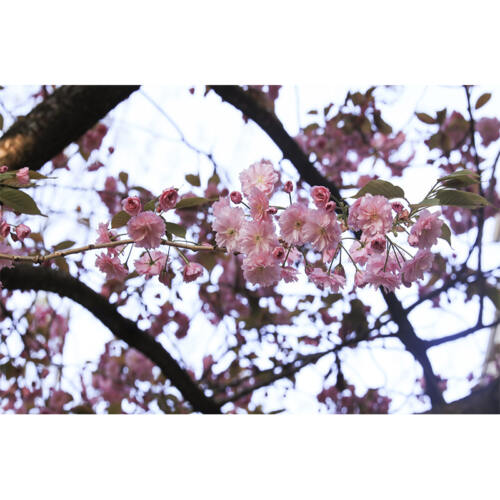 Laura Skehan Tecnica: Photo Anno: 2025 Dimensione: 40 x 60cm Descrizione: The cherry blossoms blooming period in Berlin this year was exceptionally short. The streets were filled with pink one day, the next the flowers were gone. This days I walked through the streets trying to find one that had lasted to photograph. This tree still had it’s flowers, but it would not be for long. These shorter blooms can be due to many factors, including unseasonably warm weather earlier in the year with sudden frost, extreme weather events, climate change and poor soil health due to drought.
 -
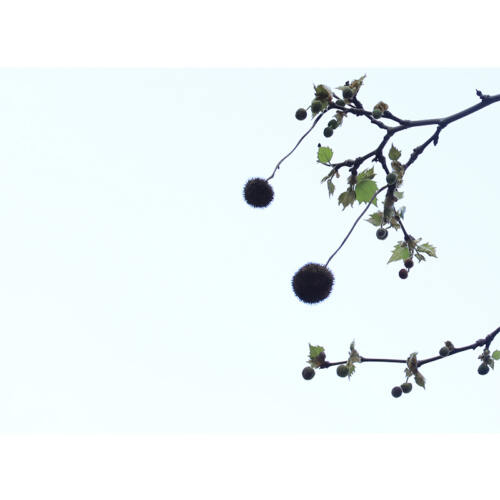 Laura Skehan Tecnica: Photo Anno: 2025 Dimensione: 75 x 50cm Descrizione: This photograph captures the fruit and leaves of the American Sycamore, a tree we often pass without noticing, yet one with layered histories. Taken in a former East German district of Berlin, the image reflects on how this North American native has come far from its original home. Chosen for urban landscapes across Europe due to its resilience against pollution and extreme temperatures, it has become a symbol of survival—a force in both ecological and political climates. Once marking fertile land and fresh water during the westward colonisation of North America, the tree now grows in cities as far-reaching as Berlin and Rome, quietly bearing witness to shifting territories, migrations, and the entangled legacies of empire.
 -
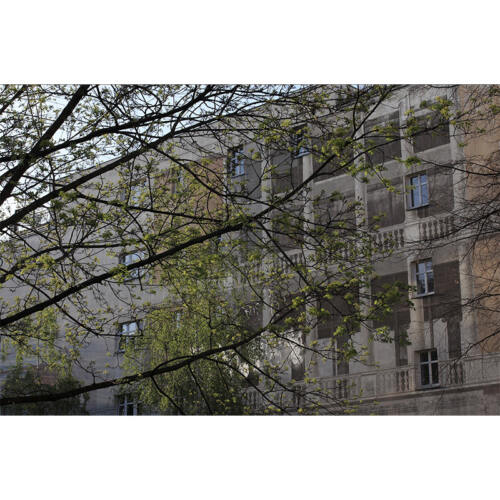 Laura Skehan Tecnica: Photo Anno: 2025 Dimensione: 45 x 35 cm Descrizione: Surface Stories, Painted Depth, explores the interplay of light, architectural surfaces, and the visual dialogue between the organic and urban worlds. The work references an anonymously crafted, intertwined design language, where natural elements and built environments merge. The series often includes playful human-made markings—whether artistic, cultural, or political—adding layers of meaning to the scene.
 -
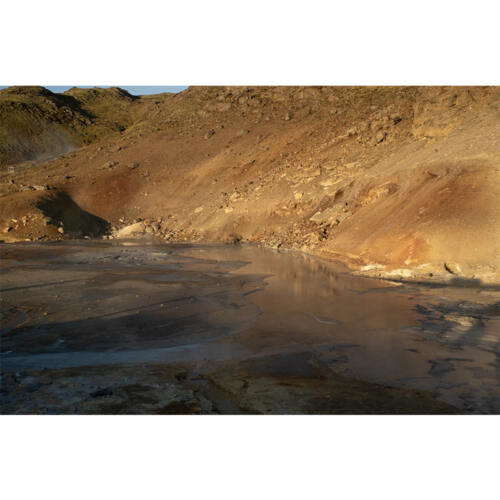 Laura Skehan Tecnica: Photo Anno: 2021 Dimensione: 70 x 50 cm Descrizione:refers to the chemical reaction through which salts of sulfuric acid form. The photograph was taken at Seltún, a geothermal area on the Reykjanes Peninsula in southwest Iceland. It’s an extraordinary landscape of vividly coloured, bubbling mud pools—where the air is thick with the sharp scent of sulfur. The palette of the terrain ranges from rich browns and fiery oranges to greens, silvers, and blues.Historically, Seltún was mined for sulfur from the 13th to the 19th century. In more recent decades, attempts at experimental drilling caused violent explosions and the formation of large geothermal vents, ultimately destroying much of the manmade infrastructure.
 -
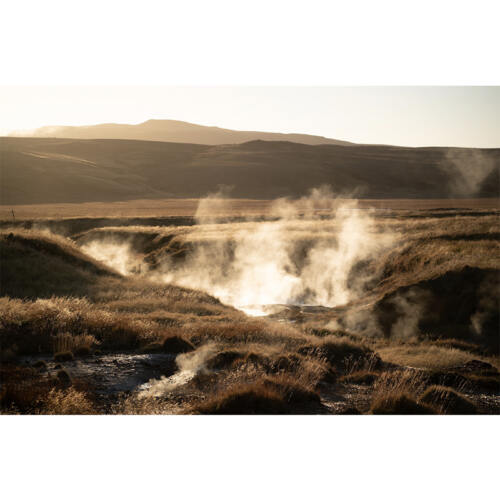 Laura Skehan Tecnica: Photo Anno: 2021 Dimensione: 60 x 90 cm Descrizione: was taken near Seltún in southwest Iceland—a fleeting moment of golden silence at a hot spring along the Seljalandsá River. These geothermal waters, rich in dissolved minerals, echo the primordial springs that once played a vital role in the chemical reactions that gave rise to life on Earth. As steam drifted upward in the evening light, the ancient and the ephemeral seemed to converge. I found myself imagining that pivotal moment before life began. Then, suddenly, a bus full of visitors arrived to explore the Seltún area.
 -
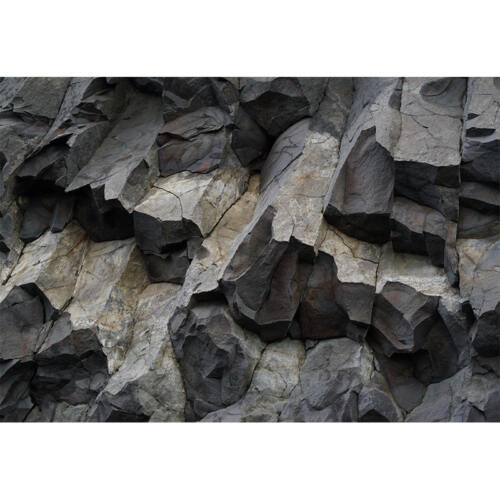 Laura Skehan Tecnica: Photo Anno: 2021 Dimensione: 60 x 90 cm Descrizione: was captured during my first visit to Reynisfjara Beach in Iceland—a striking volcanic black sand beach known for its powerful, unpredictable waves. Tourists often underestimate its force, with the heavy, coarse sand and surging Atlantic currents pulling unsuspecting visitors into the sea. The landscape is extraordinary: the ocean's raw energy, framed by towering basalt formations, transforms the beach into a kind of natural amphitheatre. My attention was drawn to the rock face—those undulating basalt columns, reminiscent of the Giant’s Causeway back home. I found myself wondering what stories these rocks had borne witness to: the tragedies, both human and more-than-human; the ever-shifting landscape; the stream of transient visitors arriving at Iceland’s southern coast. What impact does that leave behind? The scene offered a quiet but forceful reminder that both the sea and the earth demand respect.I spent a long time there in the freezing air, observing how others moved through the space, how they responded to the intensity of the environment—the charged encounters between humans, the ocean, and the basalt. While the work documents the intricate textures and geological history of this place, I also think of it as a portrait: the rock, ever still, quietly watching the drama unfold.