-
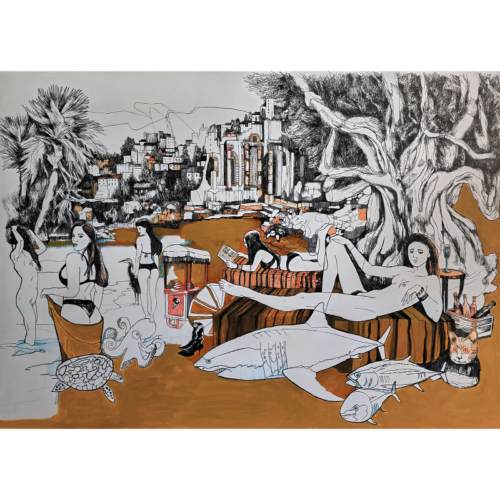 Jörg Kuplens | Arteaporte Tecnica: inchiostro e matita colorata su tela Anno: 2026 Dimensione: 140 x 100cm Descrizione: This work, created with markers, colored pencils, and ink, depicts a dreamlike scene in which fragments of reality blend with memory and imagination. Female figures sit on sofas and armchairs in a café-like interior, appearing calm, detached, and lost in thought. The intimate atmosphere is disrupted by the presence of an old train station and modern skyscrapers, which shatter the sense of coziness and create a tension between the past and the present, nostalgia and urban reality. The composition oscillates between dream and reality, with architecture and interior space merging into a poetic landscape of overlapping perceptions and emotions. The figures become symbols of reflection and inner experience rather than individual portraits. The monochromatic visual language underscores the unfinished nature of the work, as if the image itself were slowly emerging from the subconscious.
 -
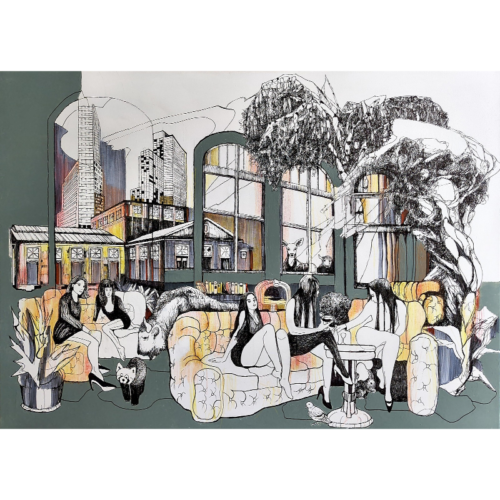 Jörg Kuplens | Arteaporte Tecnica: inchiostro e matita colorata su tela Anno: 2026 Dimensione: 140 x 100cm Descrizione: This work, created with markers, colored pencils, and ink, depicts a dreamlike scene in which fragments of reality blend with memory and imagination. Female figures sit on sofas and armchairs in a café-like interior, appearing calm, detached, and lost in thought. The intimate atmosphere is disrupted by the presence of an old train station and modern skyscrapers, which shatter the sense of coziness and create a tension between the past and the present, nostalgia and urban reality. The composition oscillates between dream and reality, with architecture and interior space merging into a poetic landscape of overlapping perceptions and emotions. The figures become symbols of reflection and inner experience rather than individual portraits. The monochromatic visual language underscores the unfinished nature of the work, as if the image itself were slowly emerging from the subconscious.
 -
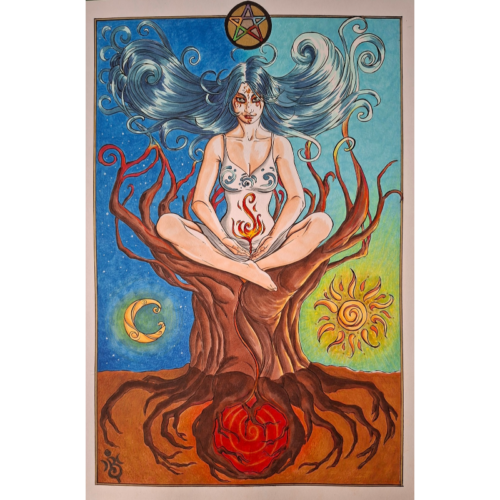 Quest'illustrazione, come la precedente, è una rappresentazione simbolica della donna. In particolare ispirata alla figura di Lilith e Eva, le due facce della femminilità. La didascalia sarebbe: Sono Terra, sono Fuoco, Sono Acqua, sono Aria, Sono Sole, sono Luna, Sono Luce sono Ombra.
 -
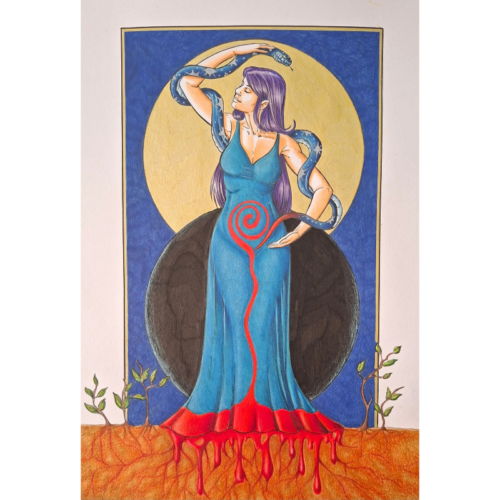 L'illustrazione rappresenta la donna come simbolo legato alla terra, alla fertilità (in alcuni popoli il sangue mestruale era usato come fertilizzante), come creatrice (anche in senso figurativo). Il serpente è legato alla donna, unisce terra e cielo, inoltre cambia pelle ciclicamente. La luna è ciclica ed è legata al mestruo. La luna nera è legata non solo al ciclo, ma anche a Lilith, la prima compagna di Adamo, la parte oscura di Eva.
 -
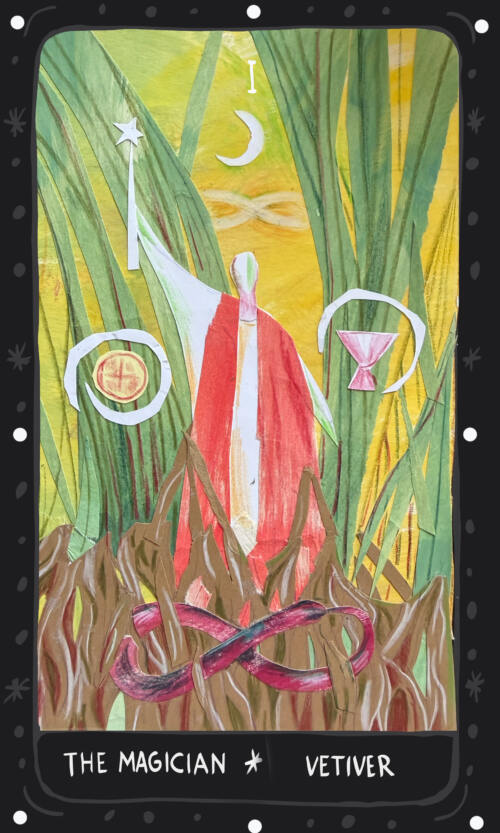 The interconnectedness of all living things in this world, along with my love for natural plant oils and their ability to bring joy and healing, became the subject of this exploration. Through the chakra system, I united the Major Arcana of Tarot with the properties of plant oils and their effects on the psycho-emotional state of a person. This created the possibility not only to consult the cards with a question, but also to use the oils afterward to support and uplift one's mood. The project currently includes around 10 completed cards, with the remaining ones in progress.
 -
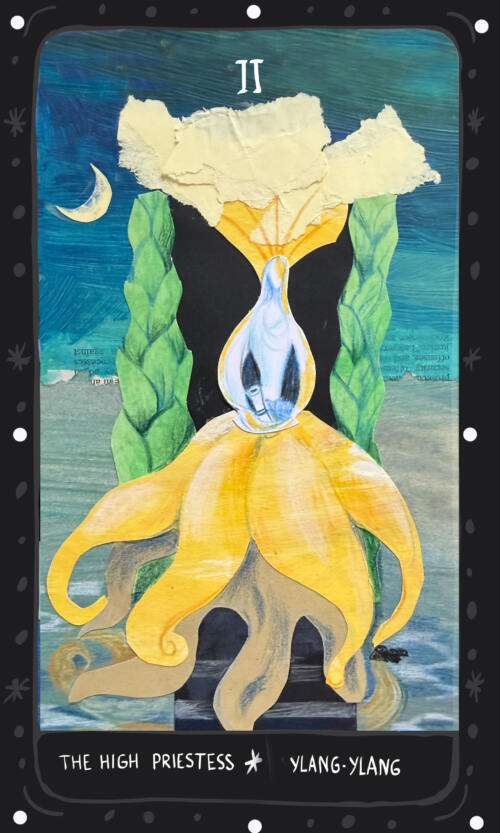 The interconnectedness of all living things in this world, along with my love for natural plant oils and their ability to bring joy and healing, became the subject of this exploration. Through the chakra system, I united the Major Arcana of Tarot with the properties of plant oils and their effects on the psycho-emotional state of a person. This created the possibility not only to consult the cards with a question, but also to use the oils afterward to support and uplift one's mood. The project currently includes around 10 completed cards, with the remaining ones in progress.
 -
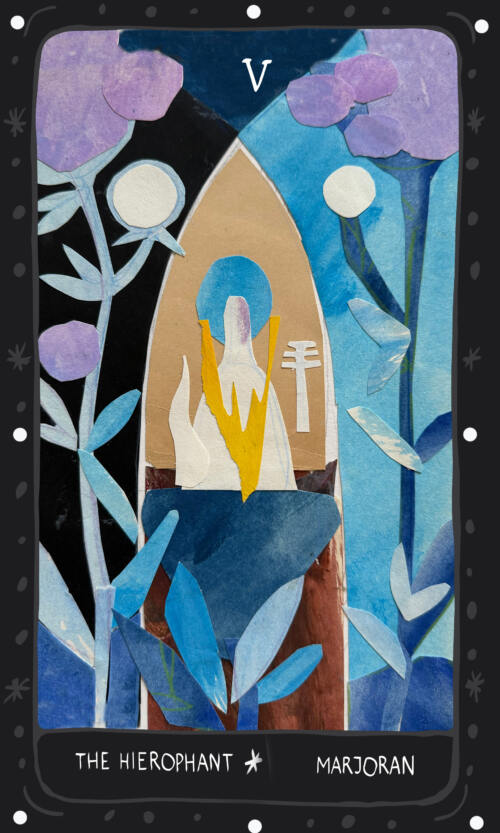 The interconnectedness of all living things in this world, along with my love for natural plant oils and their ability to bring joy and healing, became the subject of this exploration. Through the chakra system, I united the Major Arcana of Tarot with the properties of plant oils and their effects on the psycho-emotional state of a person. This created the possibility not only to consult the cards with a question, but also to use the oils afterward to support and uplift one's mood. The project currently includes around 10 completed cards, with the remaining ones in progress.
 -
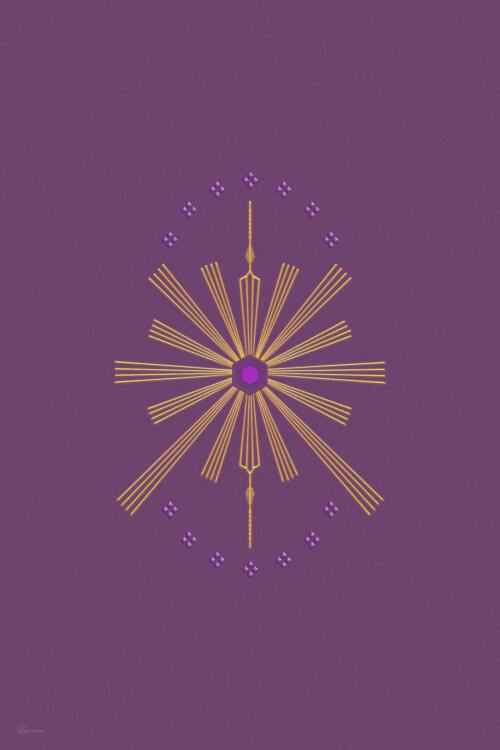 In the Sumerian initiatic tradition, creativity is a current we receive rather than a possession we hold. It descends from a higher source through the crown chakra and is interpreted by the brain, so what we call creation is what we are open enough to receive, shaped by our own experience. That same tradition mapped the seven energy centers and assigned the crown chakra to Capricorn: structure and responsibility. Too much responsibility strangles invention, the deadline and the perfectionism that paralyze the work. Too little is more dangerous: the scientists who built the atomic bomb showed brilliance while avoiding the question of whether it should exist at all. The archetype that demands responsibility is the same one that opens the channel to creation. The work is built around the Sumerian secret seal of Capricorn, with further symbolism throughout the composition.
 -
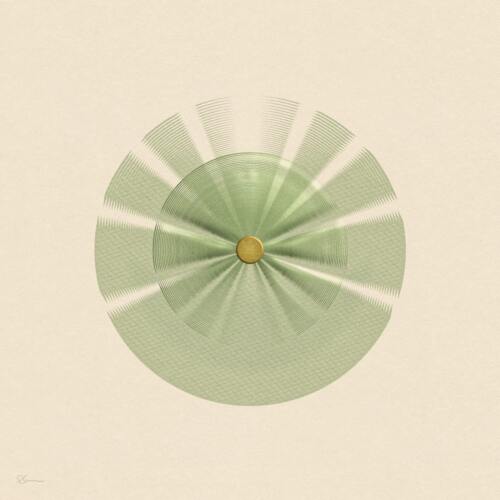 It has never been easier to connect to people, and connections have never been weaker. Many followers, many acquaintances, few real friends: the surface is crowded and the depth is empty. This is not a technological problem, but one the initiatic traditions mapped long before modern life amplified it. In Sumerian initiatic cosmology the heart chakra answers to Aries and Libra: Libra governs relationship, the pull toward the other, while Aries holds the self. When that axis is balanced, relationship begins with a person who knows who they are and has something real to offer. When it breaks, connection becomes indiscriminate, because there is no self left to choose from. The composition centers on the Sumerian secret seal of Libra, woven with hermetic geometry.
 -
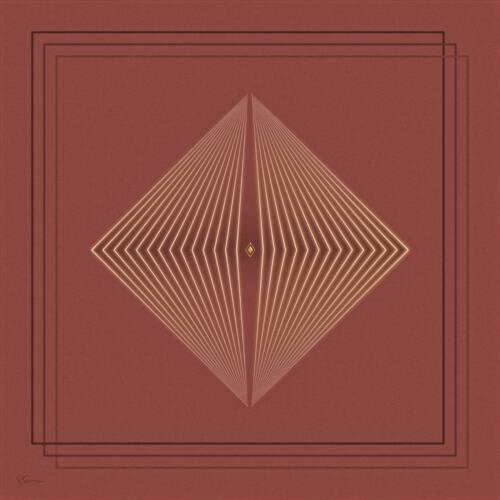 We live in a world organized around competition because we believe the resources for survival are limited. Nature shows otherwise: a single tree produces thousands of seeds, a single season regenerates an entire ecosystem. On Earth there is no lack, only flow. Scarcity is a human construct, and it grows as we disconnect from nature. The Sumerian initiatic tradition mapped this understanding through the base chakra, the seat of vital energy and survival, which answers to Cancer: origins, family, home, and gratitude for where we come from. Ancient civilizations understood the Earth as a conscious, caring force and called her Mother for a reason. With a mother this abundant, lack is a story, not a condition. Prosperity is not accumulation but the trust that you are already held by a system that has never stopped giving, and the awareness that you already have what you need to build what you came here to build. The composition centers on the Sumerian secret seal of Cancer, woven with hermetic geometry.
 -
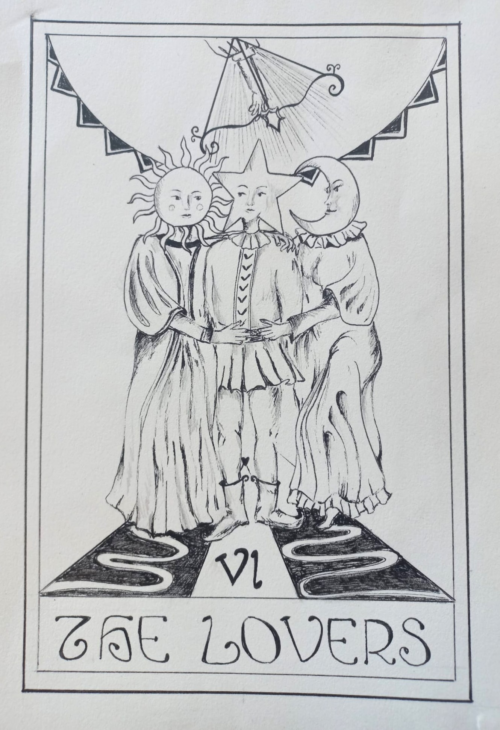 Inspired by the Lovers card from the Tarot of Marseille. The gender of the Sun and the Moon varies across cultures, as they can be either male or female. Culturally, the Star does not appear to have a defined gender—much like angels; indeed, the figure wears masculine clothing while displaying semi-feminine features. It can symbolize the union between the two and represent their love, or embody what they seek in one another. The same applies to the figure shooting the arrow—ethereal and celestial—visible only by its arm. The card’s message is one of universal love, which unites rather than divides.
 -
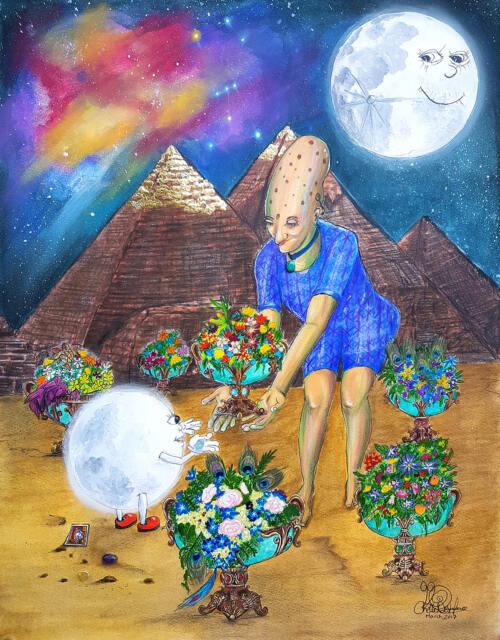 The world is as old as time, millions of years old and the moon shines down on the timelines below, and 6 of cups shows the history of timeline and memory, the person is from an older civilisation and the place stands in the current time but the moon can see the overlapping timelines.
 -
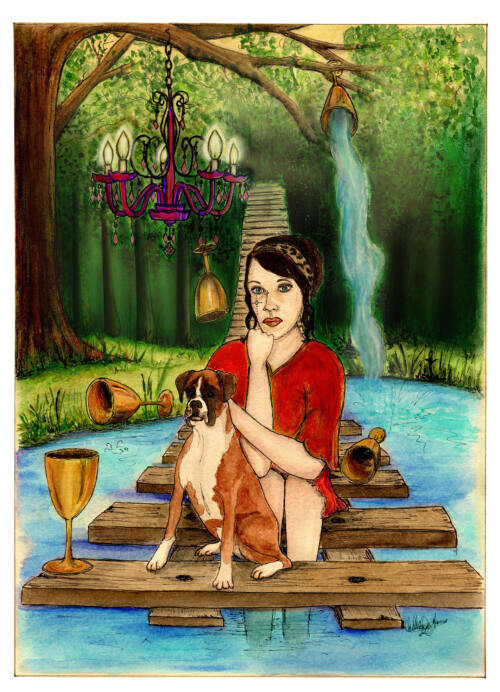 In 5 of Cups, the girl is with her boxer dog, and they know there is no point crying over spilt milk. They are sitting on the end of a pier, and nature is providing them with some insight and happiness as hidden bird sounds come about and the cups will turn up again.
 -
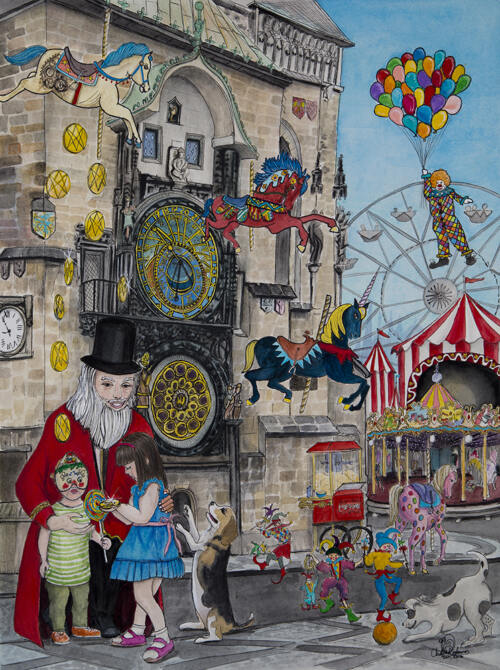 Standing outside Prague's astrological clock, it is at Ten of Pentacles that he has achieved much over the years and is able to enjoy the rewards with his grandchildren. They go to a fun fair in Prague as part of the rewards and enjoyment.
 -
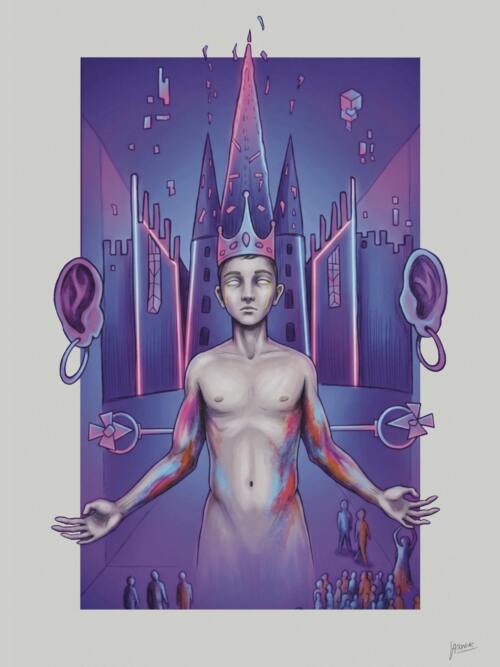 Reinterpretazione del IV Arcano Maggiore come simbolo di autorità, struttura e controllo cosmico. La figura centrale sovrasta un'architettura monumentale e una moltitudine di anime, manifestando il potere attraverso una postura solenne, la corona estesa e una percezione amplificata espressa dagli elementi fluttuanti ai lati. La colorazione viva sulle braccia e i frammenti che si dissolvono in alto raccontano la tensione tra ordine rigido e flusso creativo. Note tecniche: Line-art originale con colorazione e sfumature digitali a tecnica mista, sviluppata con l'ausilio di modelli di Al personalizzati sul proprio stile. Ho creato un gemello digitale istruendolo con le mie opere originali e le informazioni di basi. Il progetto riguarda un mix tra algoritmi, probabilità e intuito umano.
 -
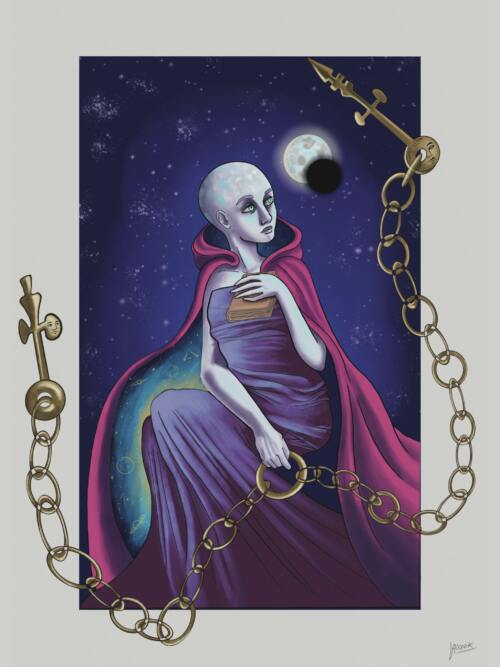 Rilettura contemporanea del Arcano Maggiore, figura di intuizione, conoscenza esoterica e mistero interiore. La figura spirituale è immersa in un cosmo notturno, avvolta da un mantello che rivela mondi celesti al suo interno e stretta al libro della conoscenza segreta. Una catena dorata con elementi antropomorfi ne incornicia la figura, evocando il legame tra la dimensione visibile e quella invisibile.
 -
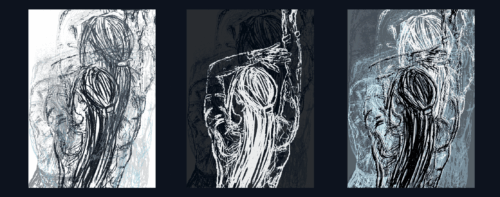 This piece explores the tense boundary between interpretation and reality. Created through traditional pencil drawing, photography, and digital re-interpretation, it mirrors the mental back-and-forth of trying to access another person. Through repeated layering, the physical figure begins to fade, shifting the focus from the person themselves to an idea of them. It becomes a study of visibility and accessibility, questioning whether reaching through layer after layer brings us closer to someone, or simply deeper into our own internal echo.
 -
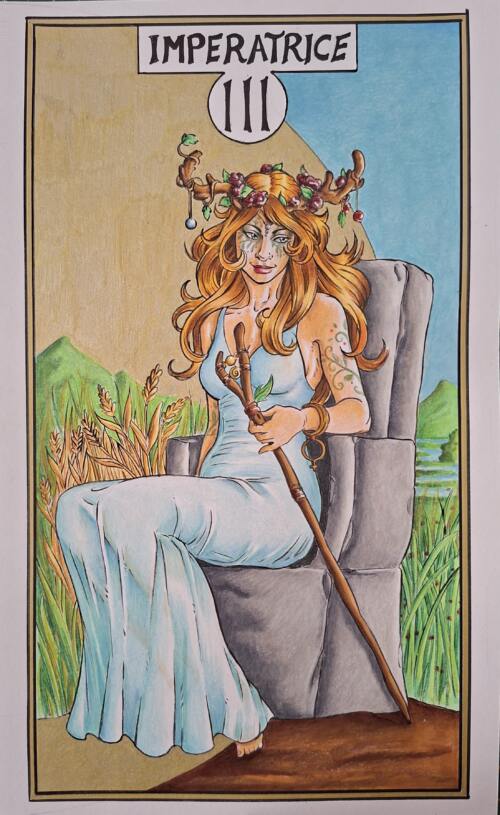 L'imperatrice è il terzo Arcano Maggiore. L'altra parte del femminile, la Madre creatrice (Madre Terra), colei che dà forma alle intuizioni, l'energia che consente all'idea di concretizzarsi. È associata a Venere, perchè il desiderio e il piacere sono stimoli per la creazione. Le due immagini si completano. Si possono infatti guardare separatamente, ma accostandole, i due semicerchi dello sfondo, si uniscono in un cerchio metà scuro e metà oro, a simboleggiare le due facce della femminilità.
 -
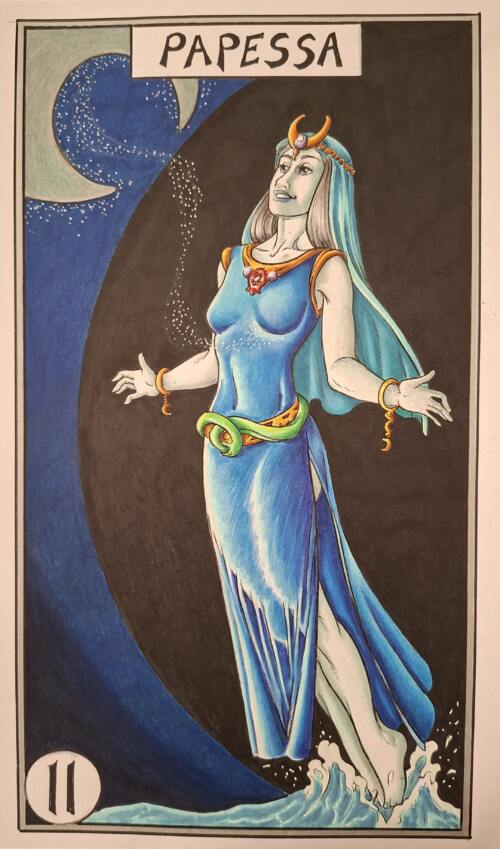 La papessa è la seconda degli Arcani Maggiori. Nella mia illustrazione ho messo in risalto la parte femminile più introspettiva. Questa carta invita al silenzio, all'ascolto di sé e all'intuizione. È legata alla Luna, all'oscurità e al lasciarsi fecondare dallo spirito per poter creare.
 -
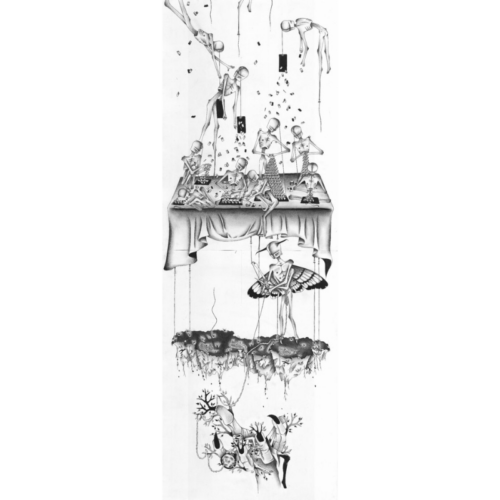 Lilu Tecnica: grafite, china, tempera Anno: 2024 Dimensione: 50cm x 140cm Descrizione: L'opera affronta il concetto della morte (tredicesima carta dei Tarocchi), ed è anche richiamata nell'omonima carta dell'opera Arcani Maggiori. Si legge dal basso verso l’alto. In basso c’è il concepimento del disegno: io tra le mani della notte, il momento migliore per elaborare pensieri intangibili. Ho raffigurato la notte come il bosco di Biancaneve, che fa paura solo al buio, alla luce, quei rami minacciosi si rivelano innocui. Lilù, vestita da Biancaneve, è sdraiata: per me è la posizione ideale per pensare, come se il pensiero fosse liquido e solo di notte, aiutato dalla gravità, potesse inzuppare la mente in profondità. Dalla sua testa, gravida di un pensiero notturno, parte un cordone ombelicale che sale verso Atropo, la parca, figlia mitologica della notte, che taglia il filo della vita senza chiedersi perché. Le ho dato le sembianze di una farfalla/falena africana ed eurasiatica che porta il suo stesso nome. Il terzo strato è una piattaforma dove le vite umane costruiscono ciascuna il proprio castello di carte: fragilità e superficialità dei progetti terreni. Ogni castello è legato con un filo alla fronte del suo costruttore, che deve tenere la testa china, se alzasse lo sguardo a chiedersi cosa ci aspetta alla fine, il castello crollerebbe. Evitare le grandi domande sulla finitezza è l’unico modo per continuare a costruire. Ogni umano è come un palloncino ad elio: quando Atropo taglia il filo, vola verso l’alto, e solo allora può alzare lo sguardo e avere paura, ormai libero dal castello distrutto. Questo volo è il quarto strato, che sfuma nell’ignoto. Protagonista è la coppia centrale: Atropo sta per tagliare il filo di uno dei due, decidendo il destino di entrambi. È l’essenza dolorosa dell’amore: quando il filo si spezzerà, il castello cadrà, uno salirà verso l’alto, l’altro potrà finalmente guardare il cielo, non avendo più nulla da perdere.